
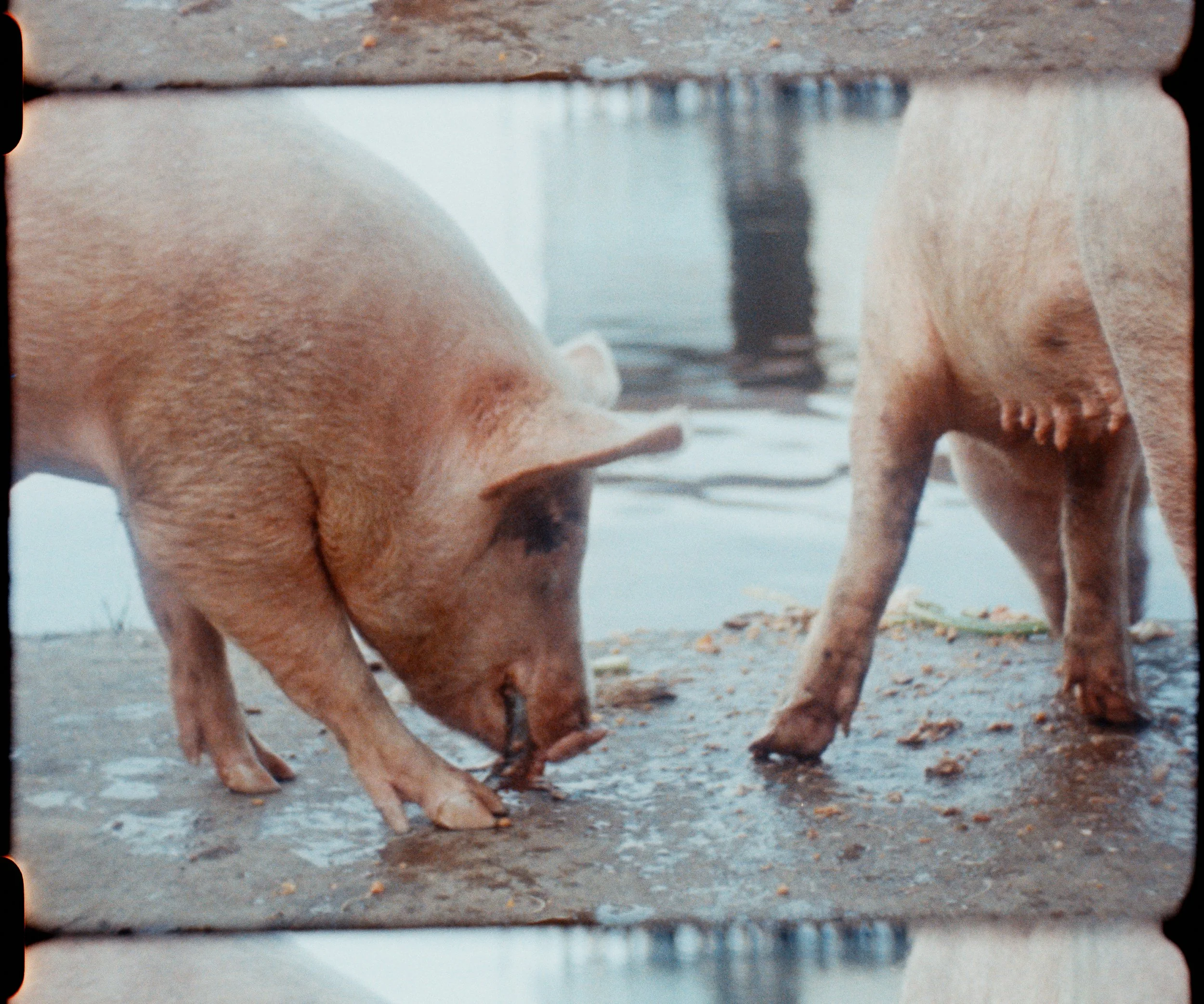
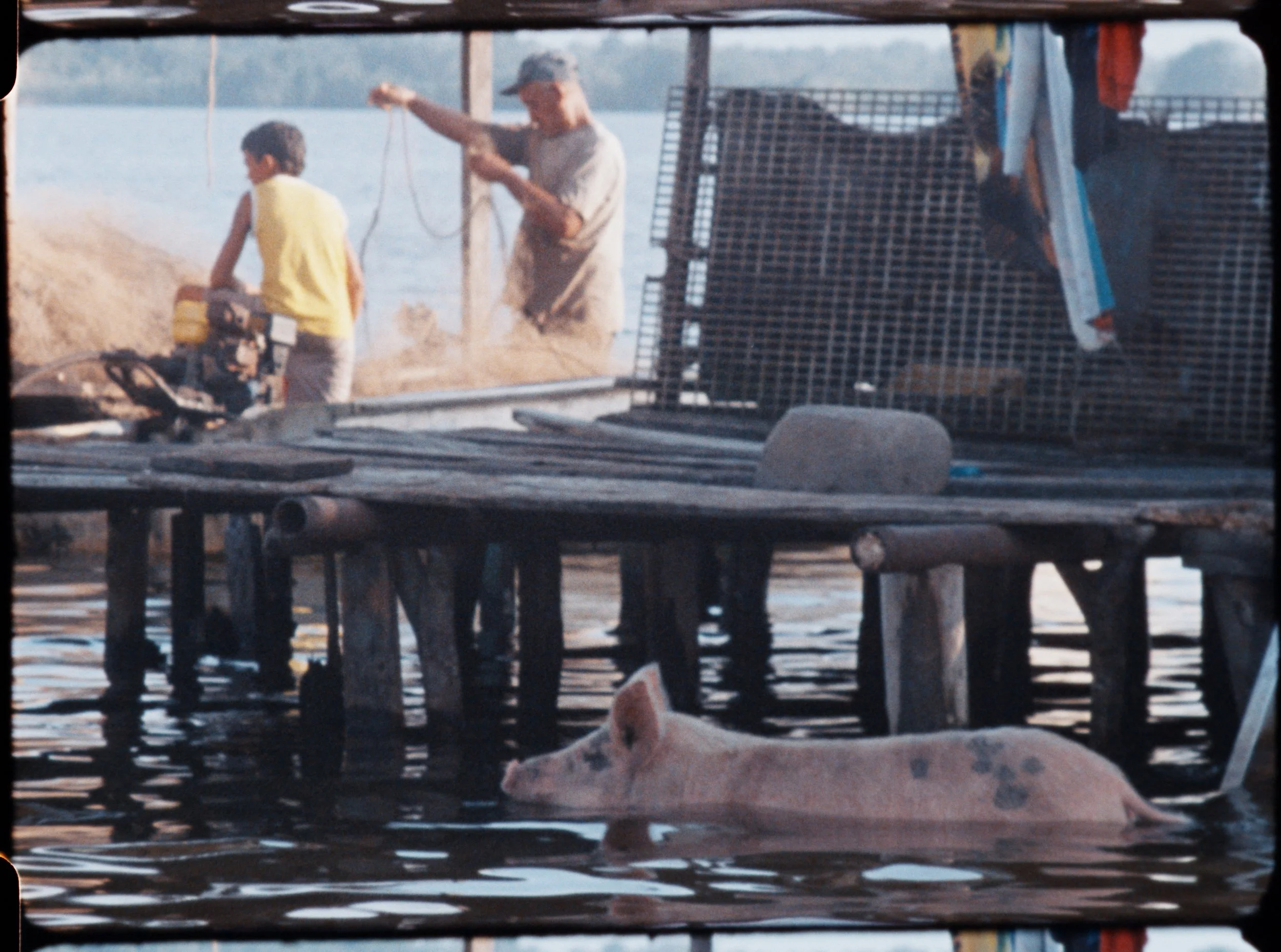
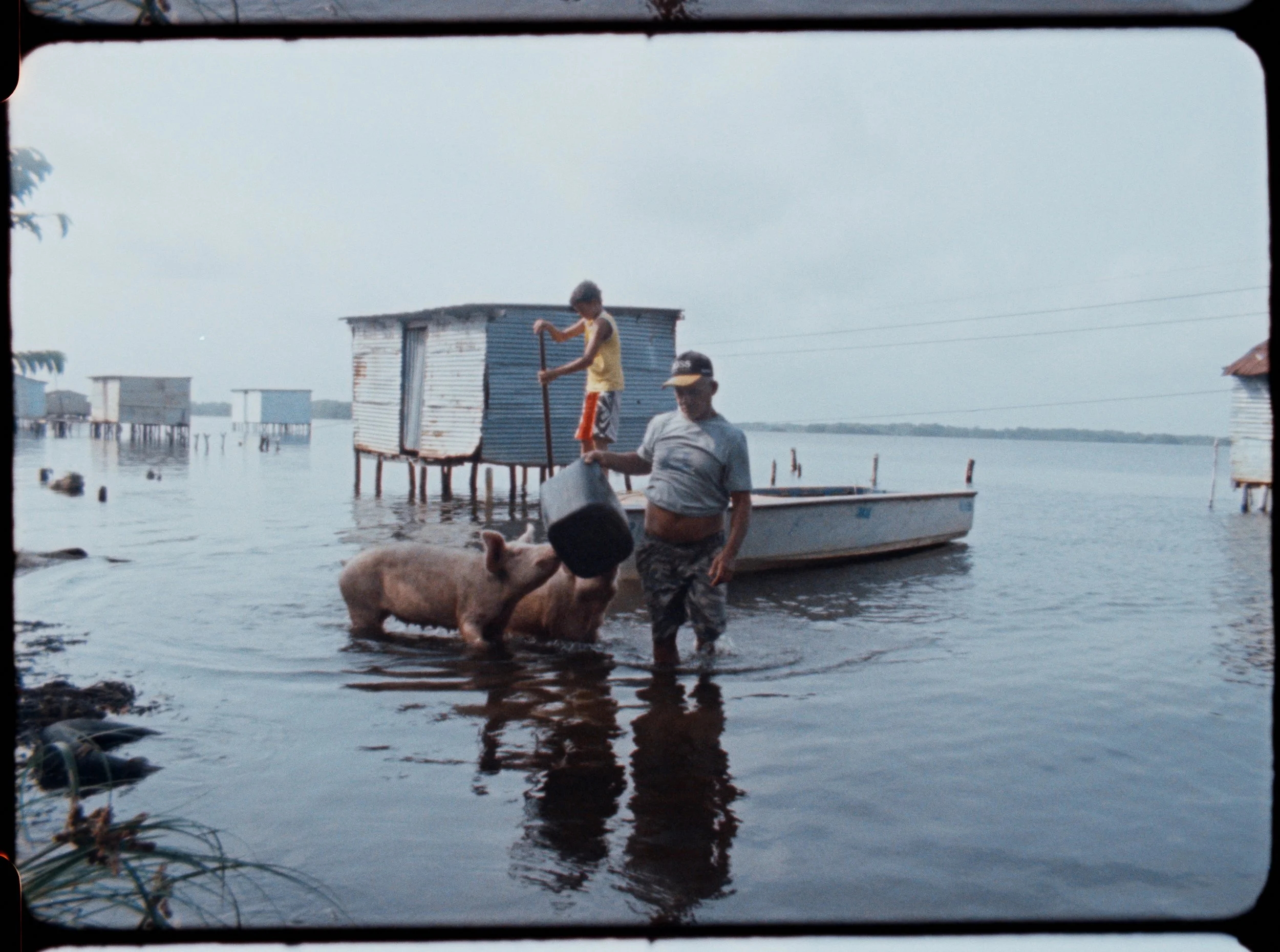
“It is a very well known fact that due to their short necks, pigs cannot tilt their heads up and look at the sky.“
pigs cannot look UP at the sky
oct 24–Nov 22
Mariangela pluchino

Mariangela Pluchino (b.1991, Venezuela), is a filmmaker, visual artist and cinematographer moving between Venezuela, Helsinki and Paris. She works with documentary, fiction and experimental film. She uses moving image as a territory where different formats, technologies and narrative devices coexist, corrupt, contradict and enhance each other. Color or black and white, a Bolex or a 360° sports camera, a true story or a lie, are all valid tools for storytelling. For her, in cinema: more is more and more is better than less.
She graduated as a psychologist (University of Costa Rica) and then did a Masters in creative documentary filmmaking (Autonomous University of Barcelona). Later on she pursued studies in directing fiction (Academy of Moving People and Images, Helsinki) and cinematography (EICAR, Paris). She is a Berlinale Talents Alumni (2023) and a co-founder of the Helsinki based film collective Film Tonight!.
Her films have been screened at ZINEBI: International Festival of Documentary and Short Film of Bilbao (Golden Mikeldi Award for Best Documentary), Tampere Film Festival (Special Award) Hot Docs Canada, Cartagena International Film Festival (FICCI), Documenta Madrid, Hamburg International Short FF, L'Alternativa - Barcelona Independent Film Festival, Nordisk Panorama, Queer Lisboa, Reykjavík International FF, among others. Her work has also been presented at the Museo Nacional Centro de Arte Reina Sofía in Madrid.
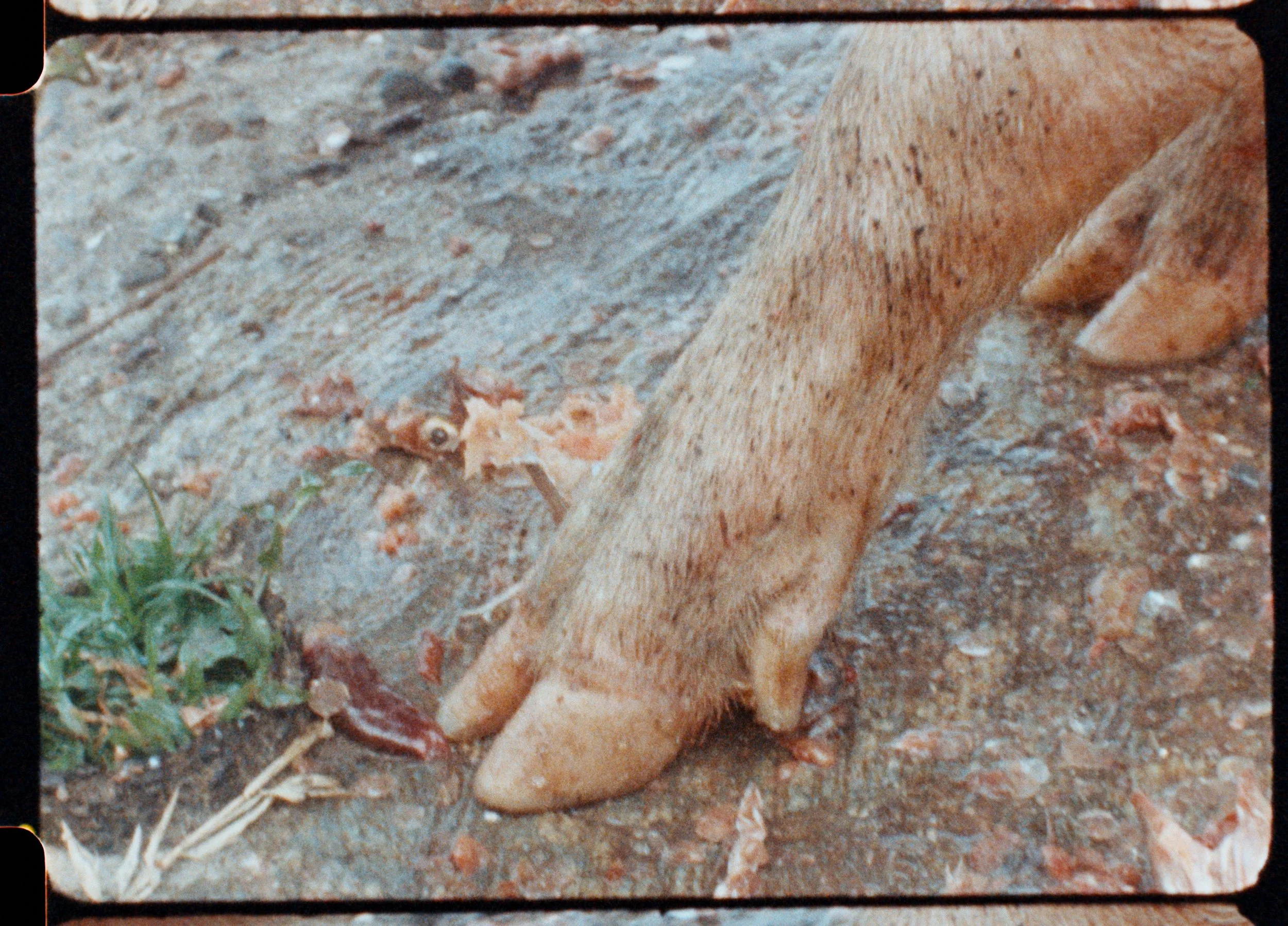
Pigs Cannot Look Up to the Sky takes place in Ologá, an isolated aquatic village in Lake Maracaibo, Venezuela, the historical epicenter of the country’s oil industry. Eight pigs live among approximately 100 human inhabitants and other species. They swim between the stilt houses, eating fish scraps from the daily catch of the fishermen. Pigs were originally introduced to the Americas by European colonisers in the 1490s and are known for their good long term memory.
Channel 1 (three chapters): a short film where pigs tell about their arrival to the Americas; they narrate a baseball match and show us the everyday contemporary life of the remote village shaped by oil extraction, isolation and their unique way of inhabiting the lake.
Channel 2: footage recorded by a remote control waterproof 360-degree camera attached to the pigs might -or might not- showcase the sky from the perspective of a pig (no spoilers).
Channel 3: Historia is a Living Animal. Short moving-image work in b&w 16mm using double, triple, quadruple exposures from a Bolex and a Geyer contact printer. Made between Venezuela and Vaasa.
The human-operated gaze of 16mm next to the remote and all-seeing gaze of a 360° sports camera blurs the hierarchy between observer and observed. The animals become not only subjects of the images, but their makers and narrators.
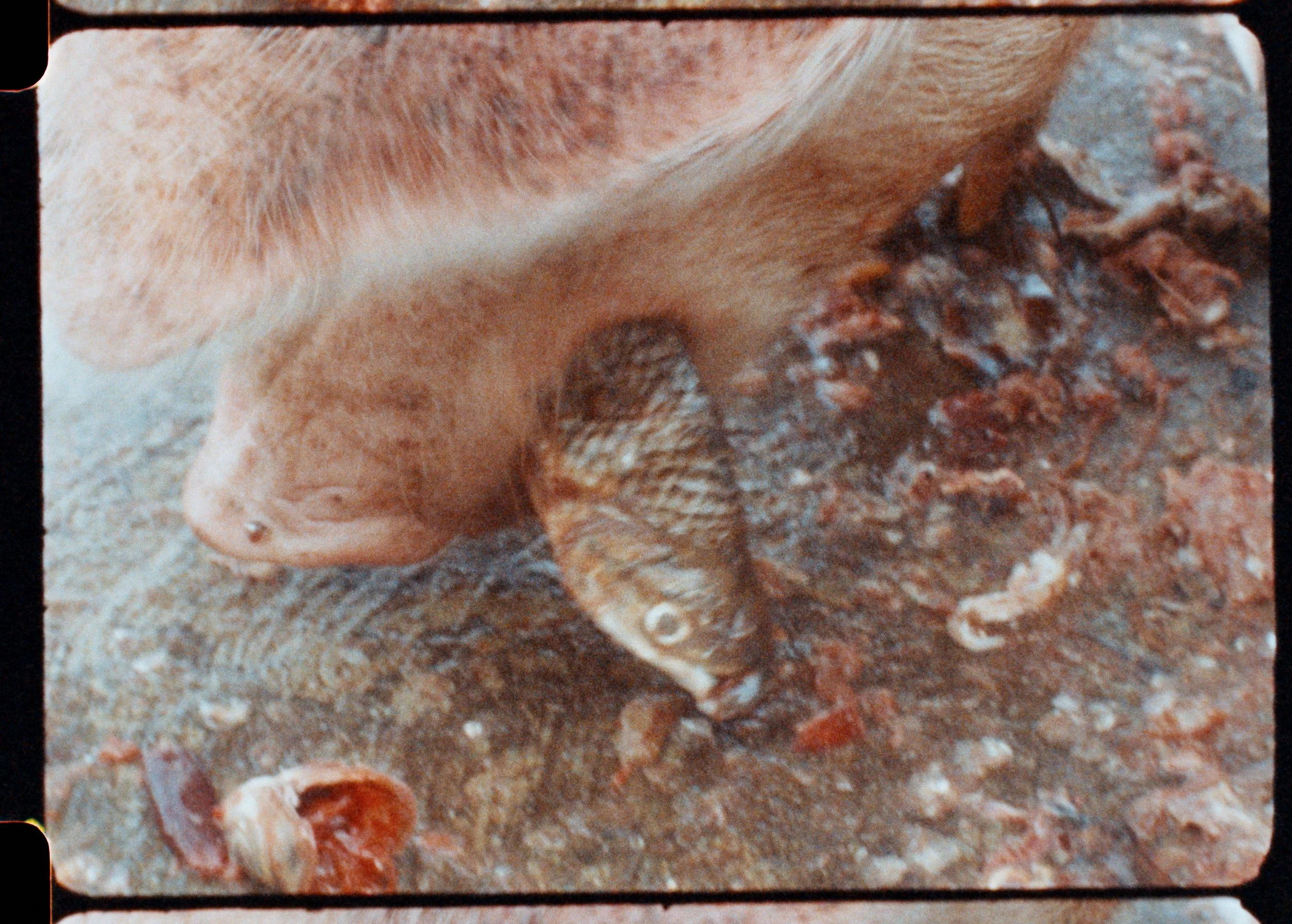
Camera, directing, hand processing and editing: Mariangela Pluchino
Sound Design: François Yazbek
Scanning and color grading: Jani Frisk
Local fixer: Hernán Parra
Camera and sound assistance: José Alejandro Sánchez
Supported by AVEK and the Finnish Film Foundation.
Film scanned and hand processing at ELK Lab Helsinki. Color film processed at Helsinki Film & Gear. Contact prints at Filmverkstaden.
Special thanks to: The Community of Ologá & Congo Mirador, Angelo Pluchino, Britt Al-Busultan, Criabufalos de Venezuela, Claudia Lepage, Danai Anagnostou, Daniel Beijar, Isabella Convertino, Jelica Jerinić, Janika Herlevi, Katie Lenanton, Laura Hyppönen, Lasse Krister Vairio, Lorena Articardi, Manon Messiant, Marjo Levlin, Mathilde Kollandsrud, Max Hannus, Artturi Mutanen, Oona Libens, Paola Guzmán Figueroa, Tatiana Moise, Ville Piippo.