
chagny
the last language
Det siste språket
the last language Det siste språket
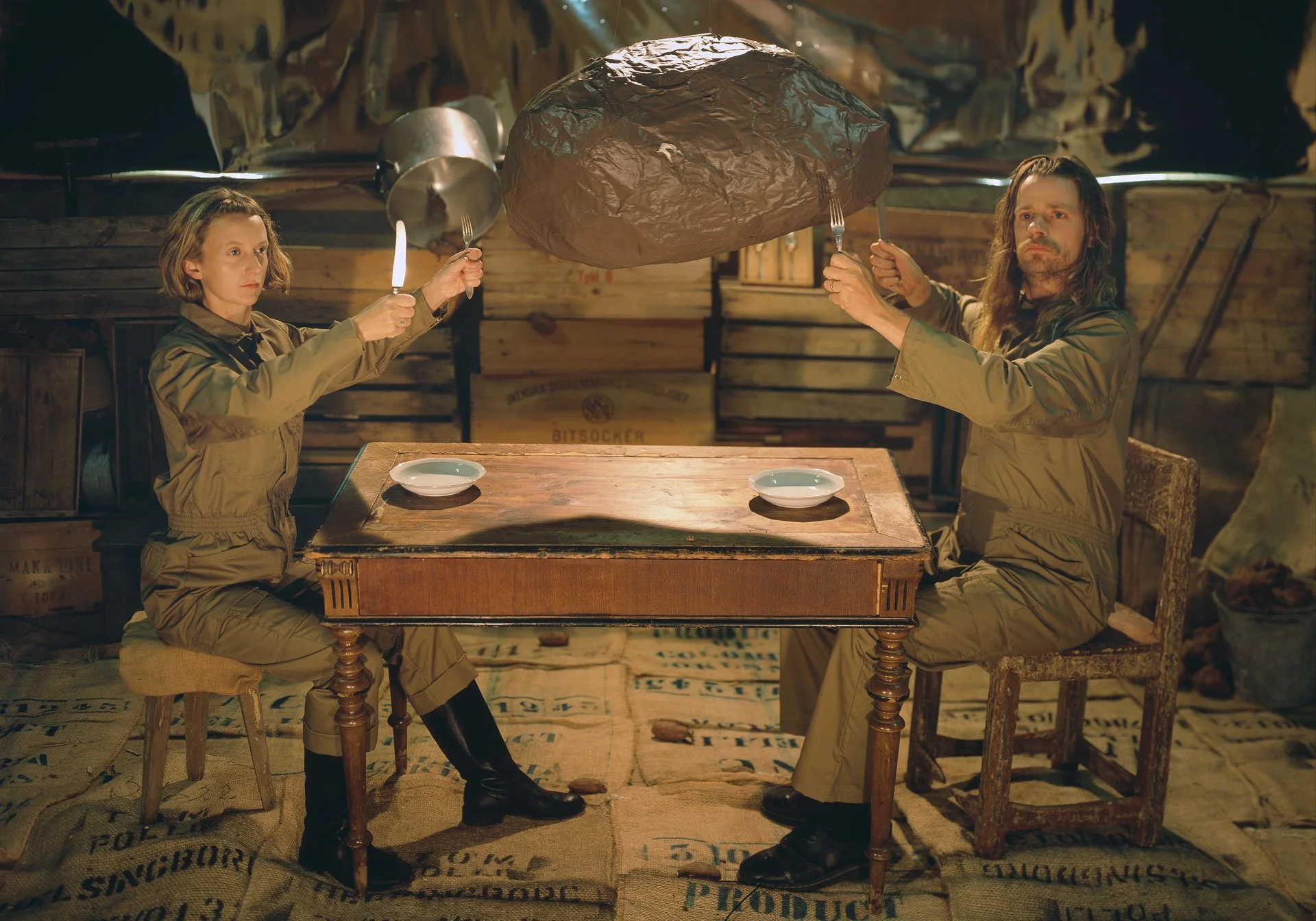
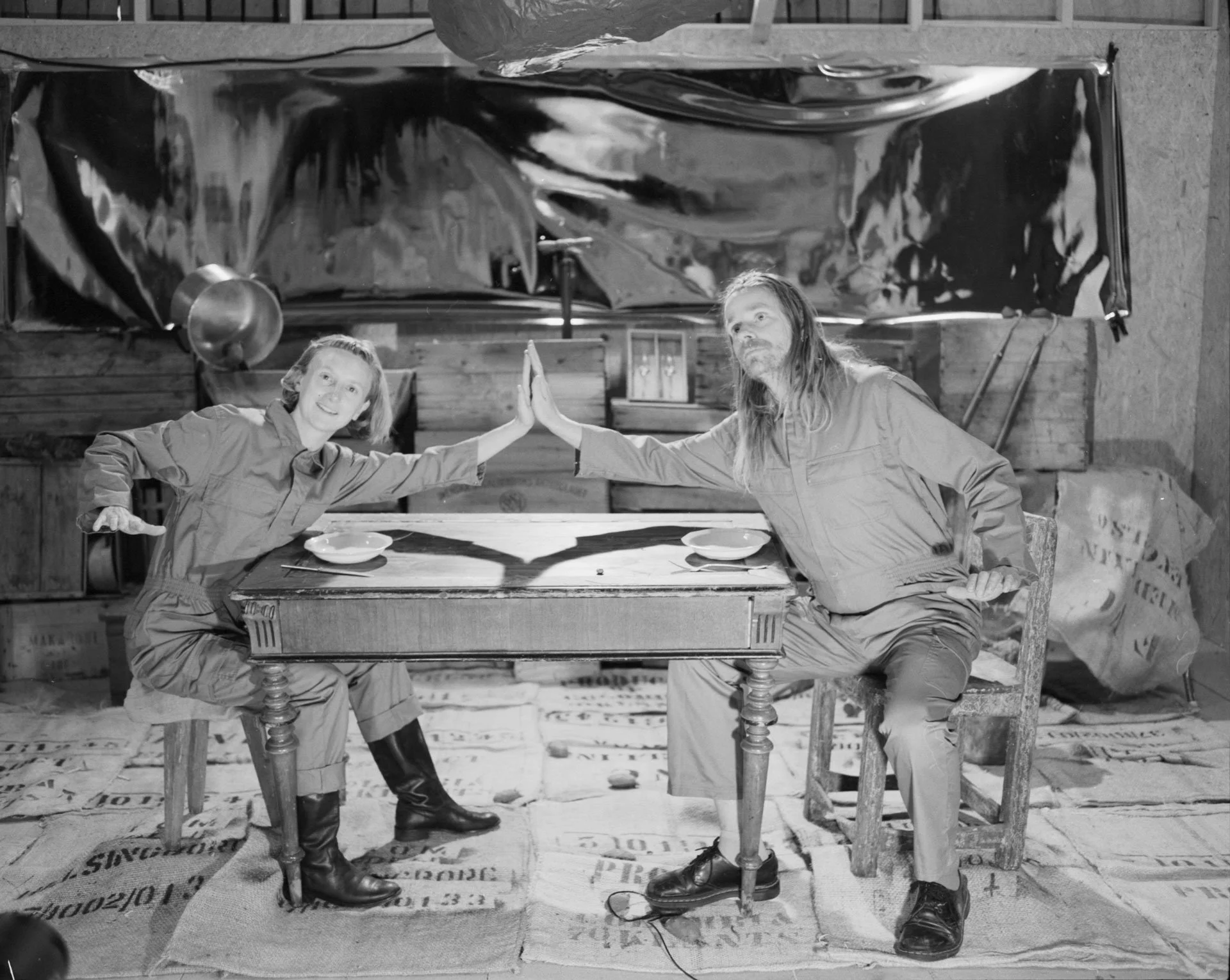
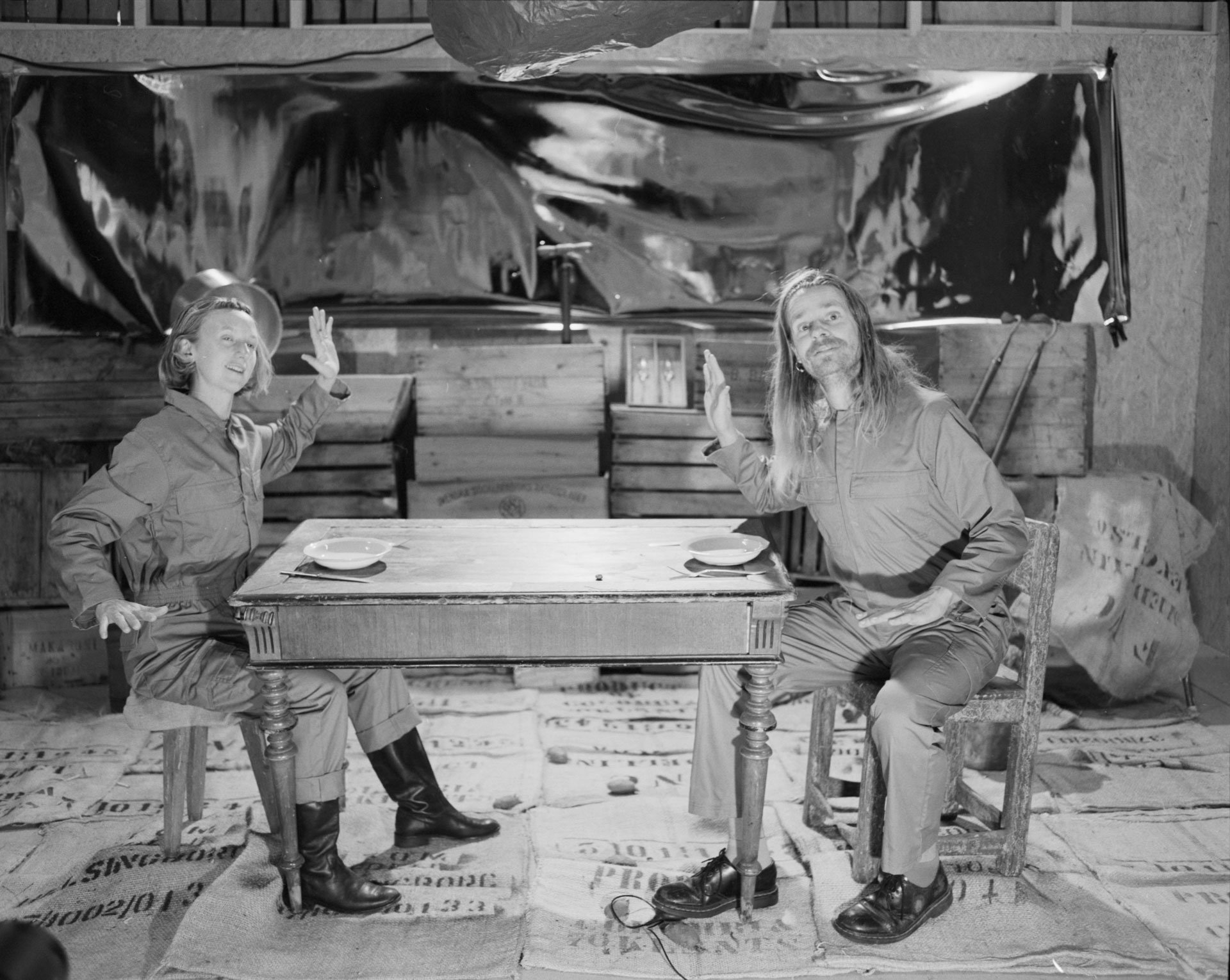
Det siste språket (The Last Language, 2024)
by Chagny, Dagny Hay and Charlie Hay
Curated by Lorena Articardi
In the Window, FRINGE Gallery
Twenty-four large-format E6 positives. A convention of cinema. At twenty-four frames per second, twenty-four large-format E6 positives are a measure of duration. Chagny takes this equivalence as the premise for Det siste språket (The Last Language, 2024), a speculative world shaped by scarcity. An entire narrative contained within the photographic equivalent of a single second. Two potato farmers, an impending shortage, and one remaining potato. Don’t cry for me, Idaho!
In Det siste språket, the familiar expectation that movement carries an action forward is complicated by its cyclical presentation –a loop display. Incremental changes are arranged in anticipation of their place within a sequence. The movement retains the irregularities of its construction, slight discrepancies in registration between poses that resist the appearance of seamless continuous action. Repeated action does little to resolve the farmers’ predicament; they remain hungry. With each recurrence, anticipation carries over from one cycle to the next, accumulating as resolution is deferred.
The sequence was originally conceived for display in a hand-cranked mutoscope. Its twenty-four photographs would pass at a pace sustained by the spectator’s hand, making the proposed second dependent on the act of viewing. At the gallery window, a digital film documenting the production interrupts the recurrence of Det siste språket. Its seven minutes and seven seconds give some of what falls between exposures a duration of its own. Dagny and Charlie prepare the set and attend to the camera. Conversations drift. There is a summer day to spend, a dog to play with. Reading the documentary primarily as evidence of how the animation was constructed risks reducing the encounter to something already apparent. That the image is constructed.
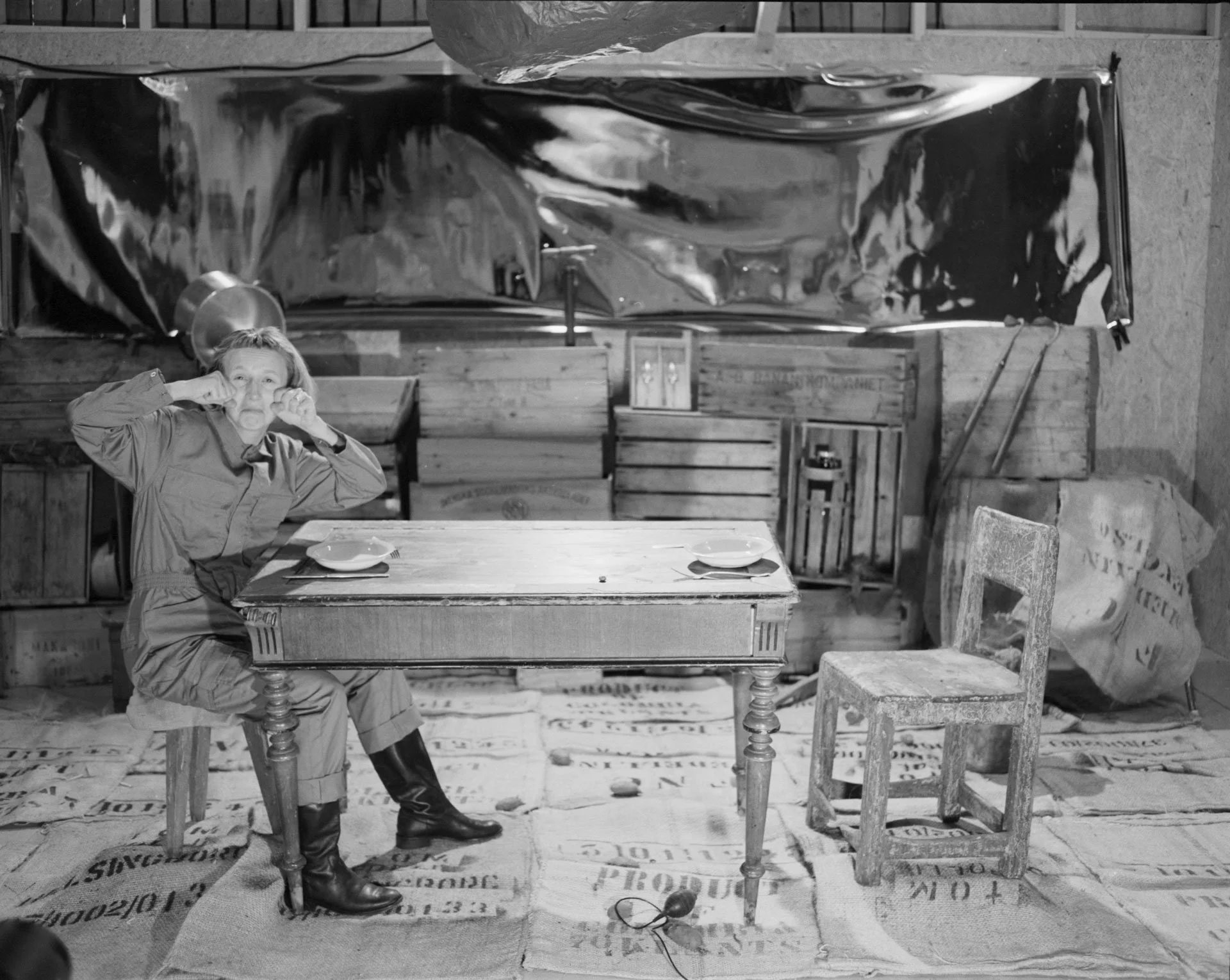
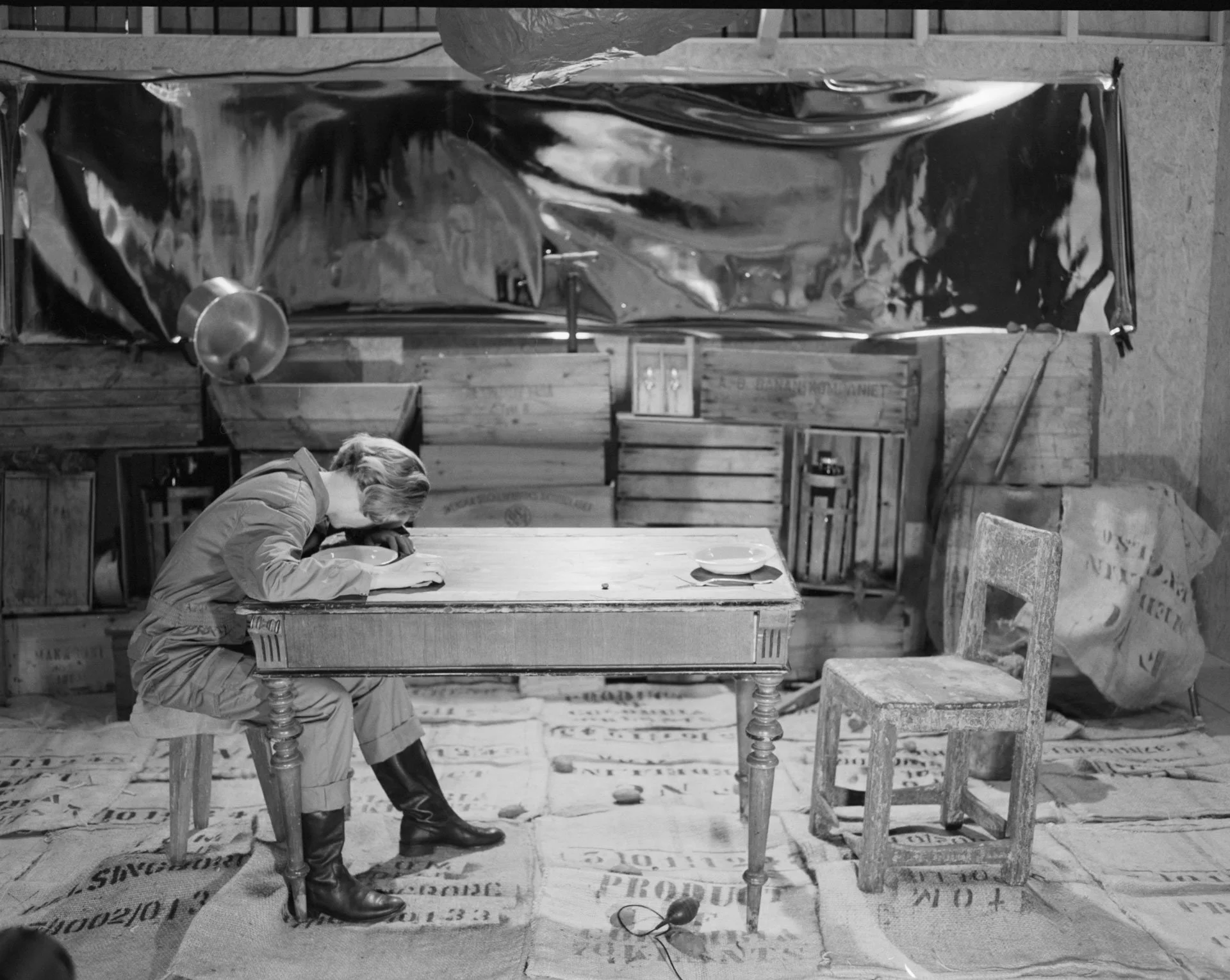
In their alternation, each film places the other in a different temporal relation. What has already been seen as a completed gesture becomes something still being prepared; what has been encountered as an unfolding process returns within a sequence that passes over much of it. Each photographic position can be encountered both as a unit of fictional movement and a sample of process. What appears as a unit of movement in one film opens onto durations that the other only partly records. Neither duration fully accounts for the other. One film’s unit becomes an interval inhabited by the other.
Someone arriving at the window enters a succession already underway. Their arrival and the time they spend there determine which passages they encounter, whether preparation precedes the completed gesture or follows it, whether they stay to see either return. A movement's capacity to repeat indefinitely is not itself an interruption of habitual recognition. Repetition can just as readily reinforce it. The irregularities of pixilation, once recognised as a familiar technique, may likewise become another convention. What, then, might make this familiar movement available to perception again?
–
Exhibition Text by Lorena Articardi
–
When what can be apprehended immediately is accorded urgency, what becomes of relations that take longer to acquire consequence? What might an arrangement of images allow us to perceive of them? Fringe’s winter exhibition for the 2026 In the Window programme also marks a beginning for First Cut, the gallery’s 2027 programme, curated in collaboration by Kim Knowles and Lorena Articardi.